
About
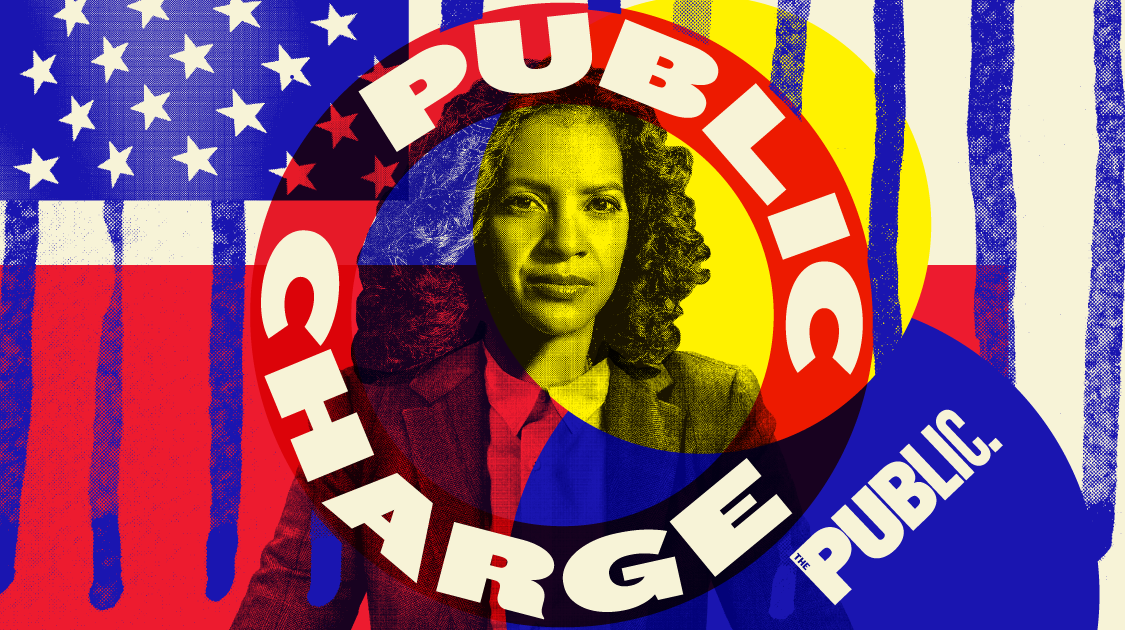
In 1982, seven-year-old Julissa immigrates to the U.S from the Dominican Republic. In 2009, she leaves her successful practice at a Wall Street law firm to supervise Caribbean and Central American Affairs for Secretary of State Hillary Clinton. PUBLIC CHARGE chronicles the challenging education of a twenty-first century American diplomat as she works with scores of other dedicated public servants to deploy humanitarian aid to an earthquake-ravaged Haiti, navigate the roiling politics of immigration, confront the reality of international espionage, and free a wrongly imprisoned American from a Cuban prison. This bracing world premiere by former United States Ambassador Julissa Reynoso and award-winning playwright Michael J. Chepiga is, at its core, about a group of Americans who believe, sometimes against all appearances to the contrary, that their government might actually be a force for good upon the frighteningly chaotic world stage. Tony Award winner Doug Hughes directs this first-hand account of the principled use of power and the enormous potential of keen intelligence, hard work and good will to bridge seemingly irreconcilable conflict.
Cast & Creatives
By Julissa Reynoso and Michael J. Chepiga Directed by Doug Hughes
Community Discussion


 Recommend it
Zabryna shines as Julissa, the main character in Public Charge. Julissa goes into public service because she wants to serve the people that laws effect, as her director says, we serve the flag not the president. The whole ensemble really does a great job of really embodying the characters they portray, you can tell that telling this story really matters to them all them just to play a part in a production. Watching Julissa struggle with putting her beliefs and values aside to follow the rules of her posting felt like a storyline that anyone across any industry could identify with. This felt like a well fleshed out script and storyline because it was written by a former diplomat. I constantly found myself wondering what parts of the story were 100% true and had happened vs what was just a story to tell for the stage. I think the ending of the play was so well done. Julissa reminds us that we can still hope. It’s still there.
 Recommend it
Cool semi-modern history story with actors playing more than one role. Well designed stage, intimate theater, and a breezy hour and 45 min.
 Recommend it
I feared this show might be a boring political lesson, but it actually sparked my interest in diplomacy and international affairs. The rhythm of the action catches your attention. The entire cast is great, and the direction seamlessly handles shifts in time and place. The stage design and audiovisuals serve the flow of the production—a play that mirrors how chaotic politics can be.
 Recommend it
I was astounded at this play’s ability to communicate the complexity and tension of foreign affairs to a commoner like me. On that, it reminded me that I love the ability theatre has to illuminate human interaction in all its messiness. That crux of theatre shines in a piece like this which really reminds you that instances of large global discussions/negotiations are just humans stuck in complex webs from the past trying to decide what’s best for each other in the present. And after all of the governmental headache and progress you experience over the course of the piece, this play truly reverberates and almost stings in a shocking way at its end. The show claims there is so much hope in tomorrow (our today, as this show completes its timeline in roughly 2014) while a minor melody plays in the final underscored moments supporting the actors smile. I left with sort of pit in my stomach as I believe the goal of the show is to provide the knowledge that positive humanitarian change is possible, but it sadly feels a bit overshadowed by the failures of the current government. There were also slight moments that took me out of the piece or confused me (the nightmare) but, for me, it still doesn’t take away from the absolutely incredible marathon performances from its leading lady (who remains on stage the entire time) and the supporting cast who are constantly shifting into wildly varying, clearly distinct, and well executed characters every other scene. (Edited)
 H 17
This is a well-needed play for the current political climate, one that helps us understand how diplomacy works in real life, and gives us slight hope. As someone who immigrated to the US, I found myself intrigued by the storytelling around Cuba, South America, and their relationship with the United States during the years. Coming without the weight of too much familiarity, real events and real people felt fresh and urgent to me in a way. The play jumps between time and location, centering around Julissa Reynoso and a deceptively simple but powerful idea: when you put human beings at the center instead of rigid rules, countries can actually move past hatred and find somewhat common ground. Julissa is written with real depth she feels like a full person, not a symbol. The set is minimal while effective, and the staging places the audience on both sides, close to the actors, creating an intimacy that pulls you into the world of the play rather than keeping you at a distance. I would recommend this to people who wants to take a closer look at this part of history, or who is simply looking for a way forward , because sometimes drawing inspiration from the past is the way to move forward. At the very least, that's what it did for me. It gave me hope, resistance, and something close to a handbook on how to do the right thing and serve the people.