
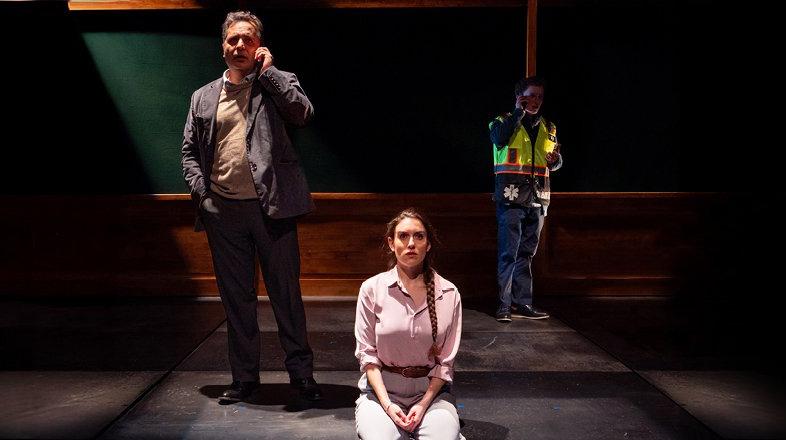
About
A psychology professor's search for his missing wife launches us on a time-hopping fugue, weaving together the stories of Stalin's daughter defecting to America, the son of a white supremacist growing to doubt the beliefs he was raised with, and the secret despair of becoming an accidental killer.
Inspired by the book Thinking, Fast and Slow by Nobel laureate Daniel Kahneman about the science of decision-making, Jonathan Spector (Tony Award-winning Eureka Day) takes us on an explosively theatrical interrogation of how we make decisions, how we change our minds, and how much responsibility we bear for the things we do not control.
Cast & Creatives
By Jonathan Spector Directed by Hayley Finn
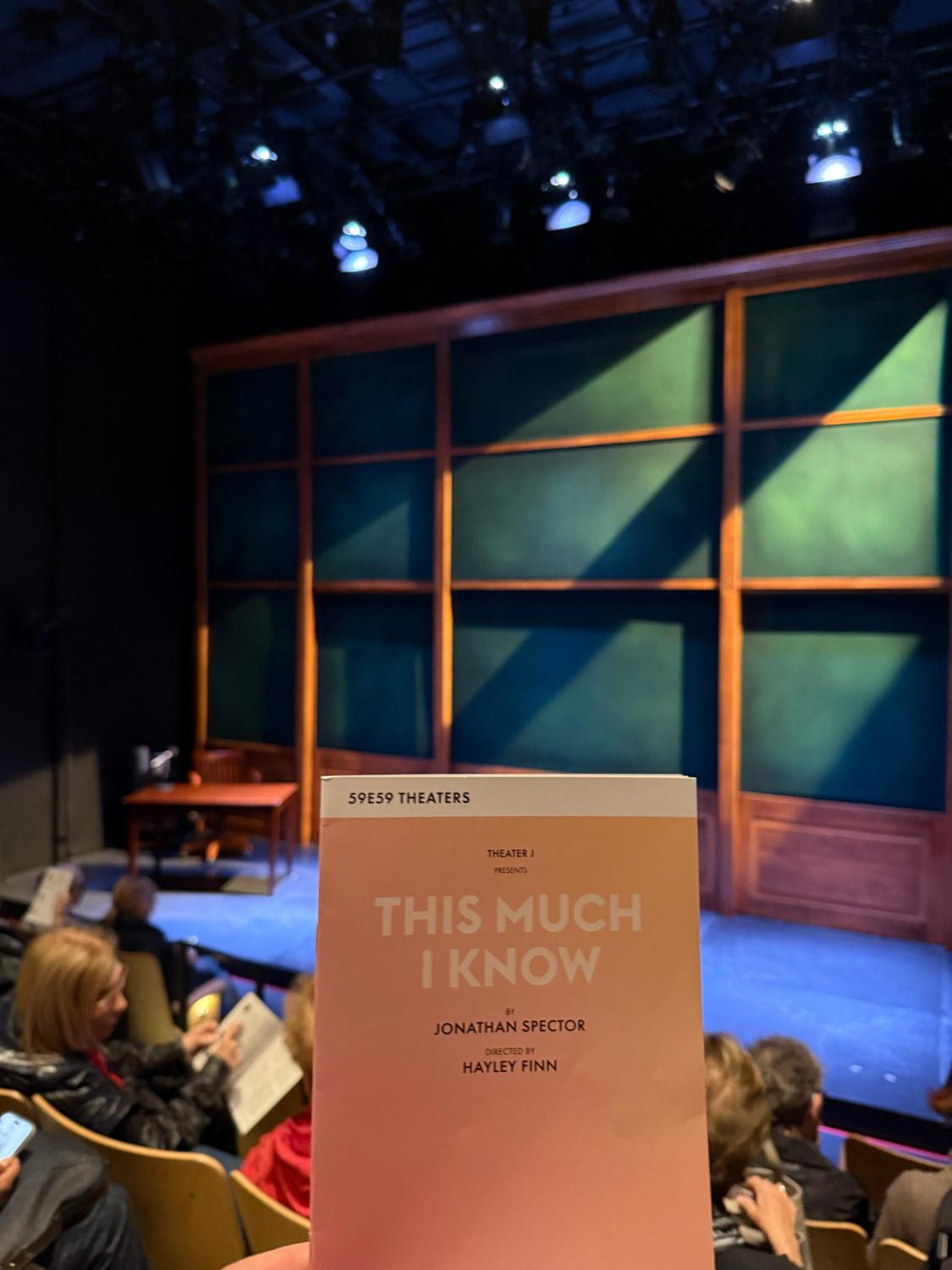
Seat Views
View all 2 seat views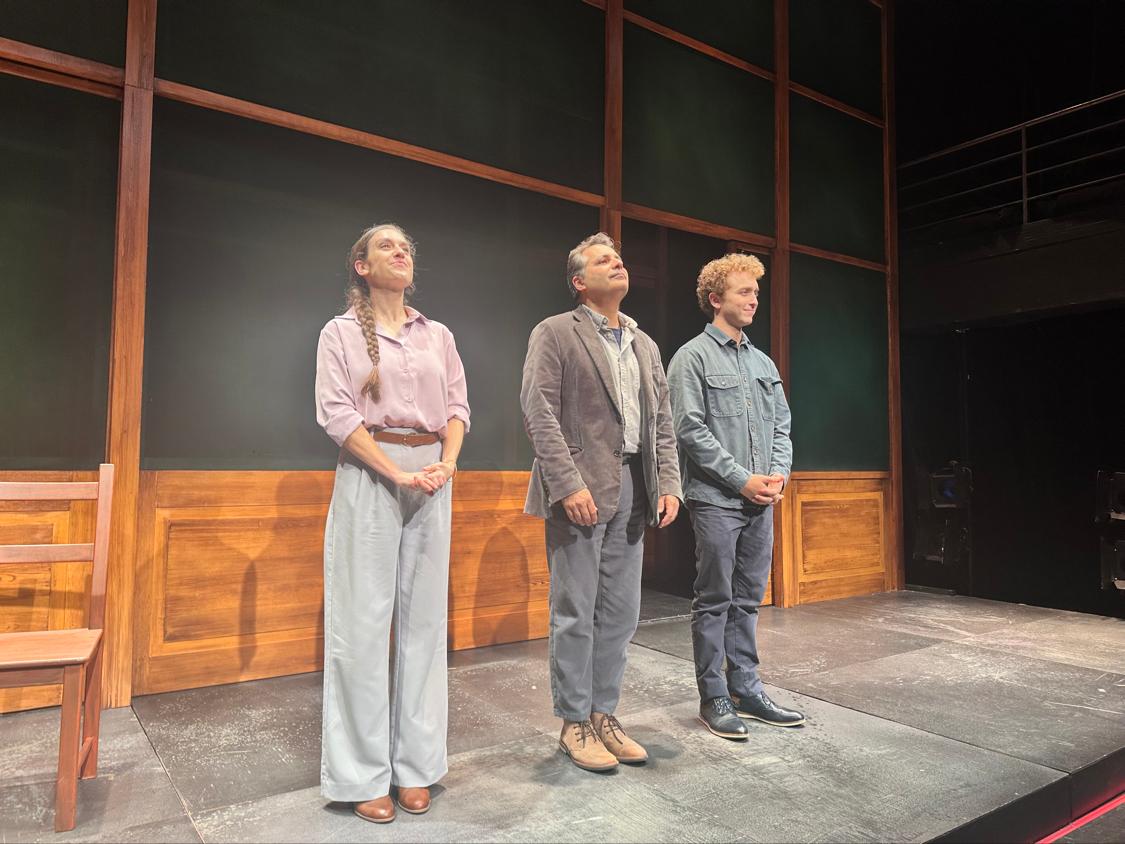
Community Discussion


 Recommend it
Review: This Much I Know 59E59 Theater A (Produced by Theater J) Directed by Hayley Finn | Written by Jonathan Spector Jonathan Spector’s This Much I Know is one of those rare plays that demands your full attention — and rewards it tenfold. What begins as a psychology professor’s search for his missing wife quickly spirals into a time-hopping meditation on guilt, belief, and the choices that shape us. Spector’s writing is sharp, layered, and brilliantly constructed — each scene connecting like pieces of an intricate mental puzzle. The beauty of this piece lies in how seamlessly each story blends into the next. One character’s line becomes another’s thought; one struggle bleeds into the next confession. It’s a stunning display of structure and storytelling — three actors weaving multiple narratives into one shared heartbeat. Their performances are outstanding, each moving effortlessly between identities, voices, and even nationalities. Watching them transform so smoothly from one character to the next was a masterclass in precision and craft. Hayley Finn’s direction keeps everything grounded while still allowing the text’s complexity to shine. The set design smartly maximizes the small space, while the projections deserve a special shoutout for how much they enrich the storytelling — giving the play an added visual language that deepens our understanding of time, thought, and connection. There’s also something fascinating about watching this piece through the lens of Professor Lukesh, our psychology professor at the center of it all. Sitting in that theater, it often felt like being one of his students — listening to a lecture on cognitive psychology while also applying your own critical thinking in real time. It’s an experience that engages both the mind and the heart. By the time the final line lands, you realize you haven’t just watched a play — you’ve participated in an experiment about perception and empathy. It’s cerebral, thought-provoking, and deeply human all at once. Final Verdict: A brilliantly tangled trip through the mind that lands with clarity and heart. Keep your seatbelt fastened — this one loops, soars, and lands right where it should.
 E10
This show was very interesting and the actors did an excellent job going in and out of each character— that was cool to see. My seat was in the spit zone. I would say this was the worst seat for that specific thing.