
About
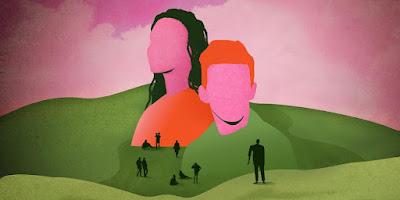
We say we’re all in it together — but are we, all in the same way? In a dinky park next to their father’s house, a brother and sister unwittingly establish a queer kind of society that tries to sustain itself in a mercenary world. Agnes Borinsky’s The Trees investigates our dreams of stability and asks — who is it for, and at what cost?
The Trees is the result of a Jody Falco and Jeffrey Steinman Commission for Emerging Playwrights.
Set and costume design for The Trees is generously supported by the Tobin Theatre Arts Fund.
Cast & Creatives
Written by Agnes Borinsky
Directed by Tina Satter
Cast
Jess Barbagallo
Marcia DeBonis
Crystal A. Dickinson
Sean Donovan
Xander Fenyes
Nile Harris
Max Gordon Moore
Pauli Pontrelli
Ray Anthony Thomas
Danusia Trevino
Sam Breslin Wright
Becky Yamamoto
Creatives
Parker Lutz
Enver Chakartash
Thomas Dunn
Tei Blow
Amanda Villalobos
Nazareth Hassan
Randi Rivera
Kayla Owen
Community Discussion


Uneven pacing, could’ve moved a bit faster or have trimmed some scenes. Amazing puppetry, solid cast.

There’s a popular saying among dramaturgs, “Why does this have to be a play? Could it be something else?” And it would be quite easy to imagine The Trees as an SNL sketch. Two siblings go to the park one day and find that they can’t leave. They’ve become rooted to the ground. They’ve become trees. More or less. At two hours long, the play by Agnes Borinsky at Playwrights Horizons does feel like one of the many SNL sketches that gets turned into a full feature, albeit a better one. In the first half hour, various goofy characters enter to comment on the tree-people. These include a vendor hocking snacks, a jaded ex, and a worrywart fair-weather friend. Borinsky’s witty banter can sustain laughs, but can it sustain a show? Fortunately, we eventually get characters with real depth. When I first spied a Rabbi entering the glen, I worried he’d come off as a one-note stereotype. But thanks to the writing and the pathos imbued by Max Gordon Moore, Saul comes off as a real person grappling with issues of faith, drawn to the miracle of the two sapling siblings. Ray Anthony Thomas brings another heartfelt performance as Norman, a man who despite getting introduced as being stuck in a bush, ends up with a moving arc about finding love and acceptance. Ultimately, the beauty of The Trees lies in its message of community, but it struggles to commit to either sincerity or absurdity through its myriad characters. The play has another identi-tree crisis in terms of what the conceit represents. Is this a play about environmental justice? Or the isolation of the pandemic? The Trees brings in a subplot about redeveloping the park into a mall, but doesn’t delve deep into the environmental argument against that, choosing a communal one instead. And the siblings have chats about missing basic ventures like leaving home to go grocery shopping, but this doesn’t really go anywhere. There’s a seed of a great play inside The Trees for sure. This makes the case for why it’s a play, just not a two hour one.
You’ve heard the old jokes that are like “a priest and a pastor walk into a bar…” right? Well imagine if a joke of that structure lasted for about 1 hour and 40 minutes…that about sums up my evening at THE TREES by Agnes Borinsky. So the story goes: a sister and a brother walk into a park and suddenly find that they’ve become—quite literally—planted like trees. It sounds far fetched, and maybe you’re wondering what happens from there. But don’t worry, Agnes is in on the joke too…at least I think so, atleast. She admits in her essay: “I’m not great at writing plots.” And, oh Agnes, how I do agree with you there. What ensues is, essentially, a plot of a bunch of visitations that don’t exactly coalesce cohesively. There’s a [spoiler alert] fire that burns down the brother’s old house—but it feels contrived, random, and doesn’t amount to much in the actual story. What we are meant to grasp from these events, or how the brother and sister are meant to progress as characters from that—seriously beats me. Maybe it’s a story about building community!? Maybe it’s a story about loneliness!? Perhaps that’s what people like about THE TREES—it’s not beating you over the head with the play’s thesis. And perhaps that’s also what people DISlike about THE TREES—it’s meaning isn’t really made clear. It seems like the play has confused sincerity and absurdity never quite finding the right balance of either to verge on the ridiculous or the poignant, leaving us, well, confused. The design of this really carried the show. With the [spoiler alert] abstract, but vaguely mall-like setting, I always felt the impending doom of the future. And the lighting always danced between setting the reality of time and creating a dance-like vibe. Really intelligent work! It grew tedious, I must admit. But also…what I walked away with was a lot of questions. A lot of questions about the meaning of theater. About the profound loneliness of having a completely different perspective of the same experience. Of community, and what community truly does for one another. So then I think again—isn’t all great theater meant to make you walk away with profound, unanswerable questions? Overall, a mixed experience of both wishing I could leave halfway through and being left with profound questions that carried me to a Times Square post-show drink.