
About
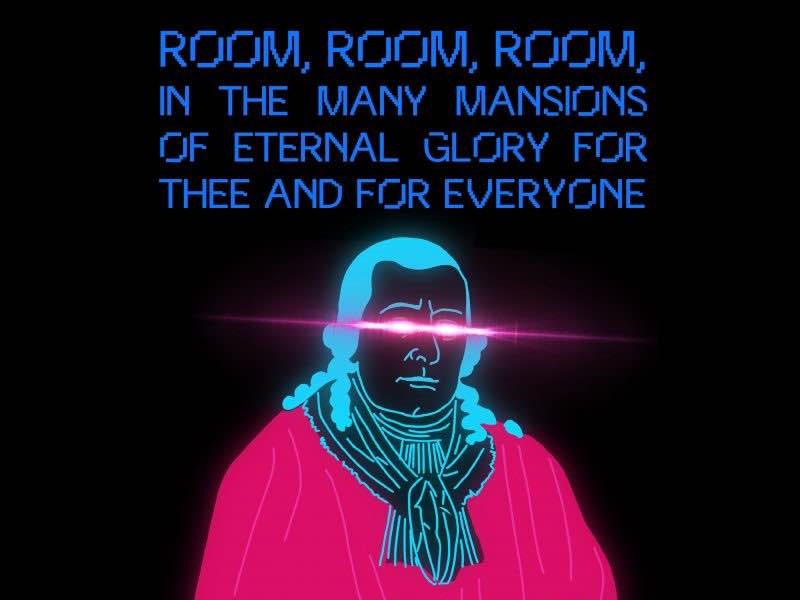
Room, Room, Room, in the many Mansions of eternal glory for Thee and for everyone is an acoustic hyperpop folk opera about death, sex, God, gender, utopia and the end of the world.
The piece centers on the Publick Universal Friend, an American mystic who had a vision in 1776 in which they were told by two angels to preach the word of God. From the moment of their vision on, the newly reborn PUF refused to use gendered pronouns or presentation, and when asked what gender PUF was, would simply reply “I am that I am.” Room, Room, Room, combines rituals from the 18th century Quaker meetinghouse to the contemporary club, using the story of PUF to reflect on our own experiences as embodied souls in 21st century America. While problematizing the American vision of utopia, we aim to invoke a temporary genderless/genderful? utopia with our audience (even if just for a second).
Cast & Creatives
Co-creators/Performers: Philip Santos Schaffer, syd island, and Andy Boyd
Community Discussion

In upstate New York, a preacher gave up using gendered pronouns and formed their own religious society. The most surprising part of this real-life event? This occurred in the 18th century. Room, Room, Room at The Brick both retells the story of the Public Universal Friend and examines its themes of queerness, religion, and gender through a contemporary lens. Oh, and it’s also a hyperpop folk opera. In between monologues, co-creators Philip Santos Schaffer, syd island, and Andy Boyd play catchy tunes setting the writings of the Friend to music or conveying the ideas behind them. They’ll occasionally welcome the audience to clap their hands, sing a call and response, or even come up and dance. In between songs, the show has light moments of interactivity, and I found the experience therapeutic. The performers speak soothingly and often pose questions to the audience inviting them to think about their own identities and find their own answers. Occasionally, the show does become didactic, but mostly when not doing so may leave people in the cold. Since historical documentation of trans people (and even queer people in general) is relatively recent, many queer narratives are left to speculation. Of course, this is also because for much of history, being openly queer was not allowed. So the definitive record of someone announcing themselves as gender non-conforming in the 18th century is a big deal. And Room, Room, Room celebrates that, but also does confront the complexities of tying 18th century values to those of contemporary society. If you’re at all someone interested in questions—and even contradictions—around religion, spirituality, gender, queerness, body image, and even identity in a general sense, I recommend Room, Room, Room as food for thought. The ways in which the creators/performers examine these themes, reframing the lenses and shifting the angles, may lead folks to new insight. And at the very least, you’ll learn about a forgotten moment in early American history that’s surprisingly relevant to today, while jamming out to the folk tunes of a three-piece band.