
About
What happens to the stains you can’t get out? Road Kills follows Owen, a roadkill collector, and Jaki, a drunk driver stuck doing community service. As they traverse the highways of Wisconsin, they connect over their common ground as outsiders, challenge each other on issues of faith and family and careen towards a collision that threatens to shatter them both. Sophie McIntosh’s unflinching new play forces us to confront the long-lasting repercussions of abuse—and urges us not to look away.
Cast & Creatives
Written by Sophie McIntosh Directed by Nina Goodheart
Seat Views
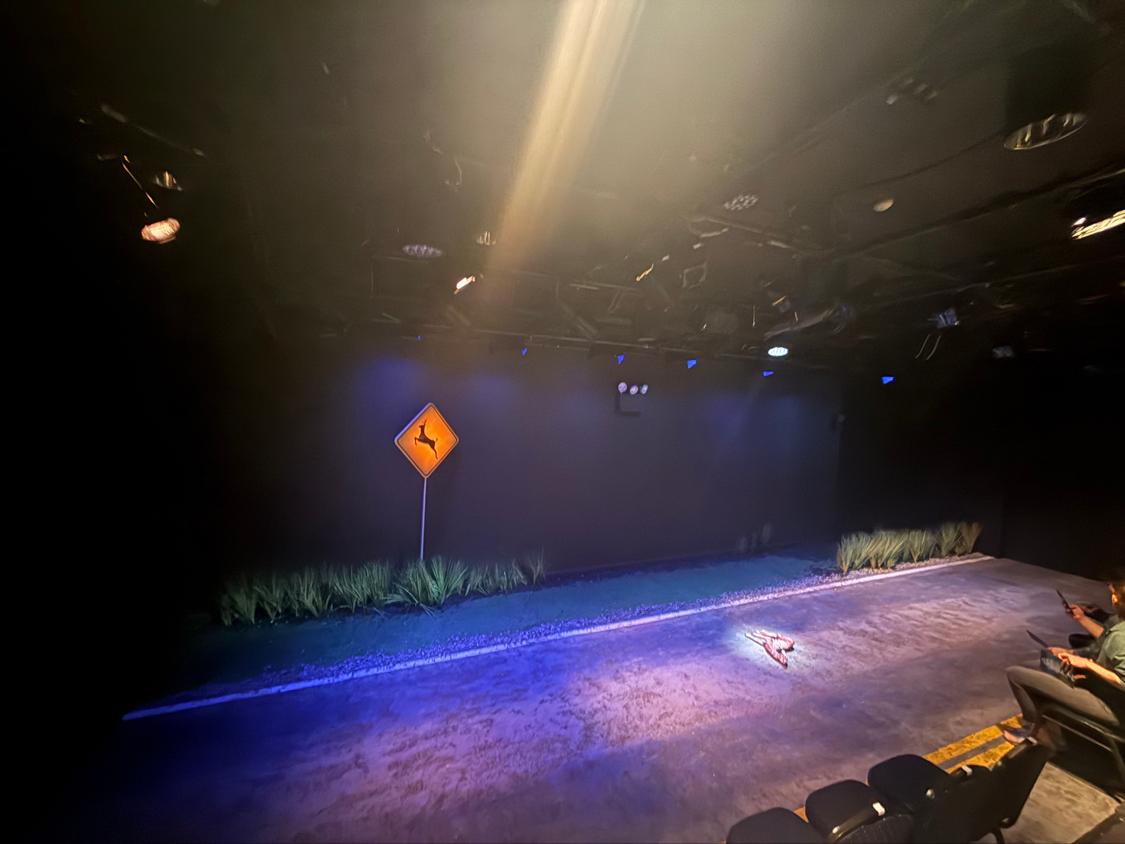
View all 2 seat views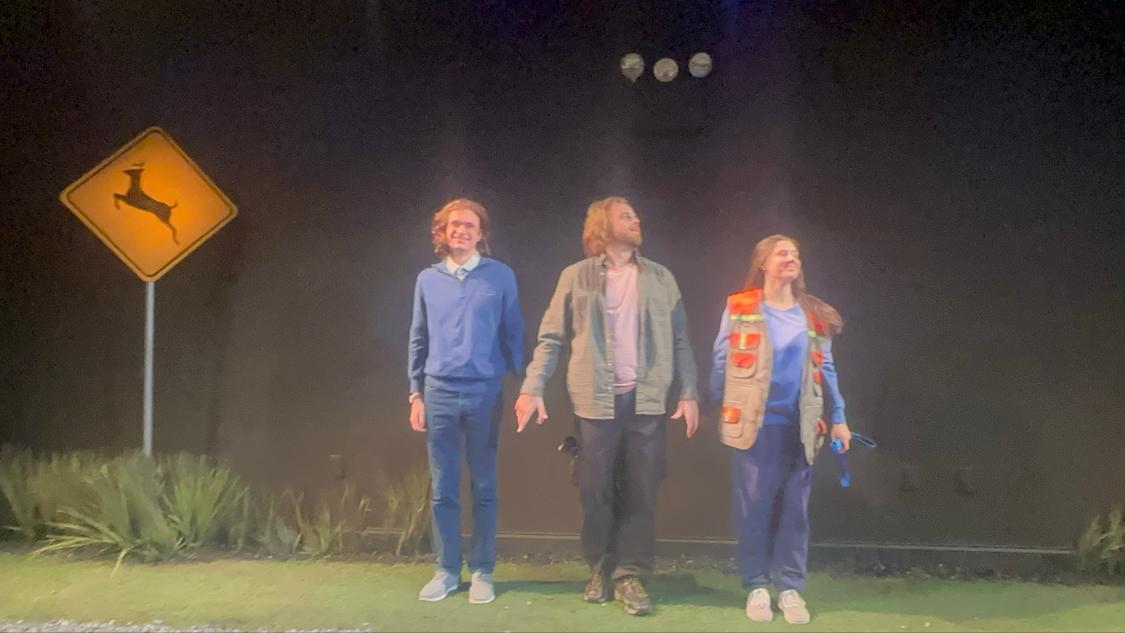
Community Discussion


 Recommend it
Road Kills is the type of show I beg the universe for: Dark, intense, and courageous enough to go the extra mile to incite feelings and confront ideas that are horrifying to sit with. A summary of the play’s plot points here might give the impression of a piece that contains a lot of abjection and depravity solely for the sake of shock value, but that could not be further from the truth. The work of this team, namely Sophie McIntosh (Playwright), Nina Goodheart (Director), Mia Fowler (Dramaturg and Associate Director) and Willow Funkhouser (Fight & Intimacy Director) is unbelievably sharp, dramaturgically rigorous, and uniquely creative, and it comes across all over writing and staging of this piece. I marvel at how well Road Kills guides audiences from a place of discomfort to a place of insight and epiphany multiple times in its 80 minute runtime. If you’re someone who has a high tolerance for dark themes and content, I would recommend seeing the show with little information beforehand, but if not, there is a robust set of content warnings of various levels on the play’s website, one of multiple hallmarks of compassionate and conscientious producing that I’ve come to know the Good Apples Theatre Collective for. *Mild Spoilers Ahead* The piece is also sublimely performed and designed. D.B. Milliken holds himself together so tightly as Owen, and makes a great foil to Mia Sinclair Jenness, who does essentially the opposite as Jaki, who is assigned to work Roadkill pickup/cleaning shifts under Owen’s supervision as community service after a crime. Both of the leads electrifyingly exacerbate each others’ traumas and triggers, when they aren’t endearingly smoothing things over in between. The characters themselves and their dynamic as a pair demand serious precision and clarity; Jenness and Miliken never falter in this respect. The production’s scenic design (Junran “Charlotte” Shi) is an impressively detailed stretch of road that puts the audience in chillingly close proximity to the action of the play. The many animal chunks strewn about that road (props design by Sean Frank) are just realistic enough to induce repeated shudders, and are filled with juicy, crimson secrets that are spilled all over Saawan Tiwari’s wintry Wisconsin work costumes. I was delighted and impressed to no end by the work of lighting designer Paige Seber and sound designer Max Van, who take the audience into the “moment right before disaster” for half a dozen unique looking and sounding roadkill collisions in the play’s scene transitions. Each collision happens for a different reason, in a different vehicle, with a different animal, and with the driver braking or swerving differently, and Seber and Van’s designs capture every grisly nuance of those scenarios. I’d give anything to have been a fly on the wall when these roadkill collisions were being designed and teched, second-by-second. (For folks who are fans of the Good Apples crew and their close friends and collaborators, the transitions also feature some fun Easter eggs!) (Edited)
 Recommend it
YAY GOOD INDIE THEATRE!!! Everything about this production is top-notch: the performances, the script, even the lights and sound??? (Also the props person must’ve had SO much fun) Insanely dark, but with true heart. McIntosh does a wonderful job exploring the grey-areas of who is worthy of redemption and what a “good” person is/can be. Goodheart’s directing choices seem to toe the line perfectly between naturalism and her signature surrealist style. The performances are true masterclasses! MUST SEE! BUCKLE UP!
 B2
 Recommend it
Interesting, twisted, gory, and so well done
B9 Recommend it
Fantastic, disgusting, and mind blowing. A win for indie theater!
Road Kills Paradise Factory (Good Apples Collective) Written by Sophie McIntosh | Directed by Nina Goodheart Sophie McIntosh’s new play, directed by Nina Goodheart, throws together a roadkill collector and a drunk-driving offender for six Saturdays of community service — but what starts as punishment becomes something far more haunting. The moment I stepped into Paradise Factory, I felt the chill of a Wisconsin back road. The frigid air, the stretch of asphalt, the yellow divider line, even a deer crossing sign — and yes, plenty of roadkill — pulled me straight onto that roadside with the cast. The production thrives on atmosphere. Lighting, sound, and set design are precise, keeping the tension high throughout. The transition scenes — total blackouts pierced by headlights, the roar of engines, slamming brakes, jolts of impact, and vivid voiceovers echoing real-life road hazards — brilliantly conveyed life on these rural highways. Each driver’s distraction, each roadkill, raised questions of responsibility and blame, and the audience leaned forward, bracing for what came next. Suddenly, I wasn’t just watching a play; I was living inside it. Performances sealed it. Mia Sinclair Jenness owned Jaki, balancing jagged vulnerability, brash humor, and raw trauma with astonishing precision; every outburst and moment of shutdown felt completely lived-in. D.B. Milliken’s Owen was equally compelling, a quiet, grief-soaked anchor carrying his father’s legacy, caring for his mother, and navigating the isolation of a life mostly lived alone — all while showing his strangely tender bond with the family dog. Michael Lepore’s dual roles, by contrast, never reached the depth of Jenness or Milliken, feeling serviceable but underdeveloped. Not every beat landed perfectly, but the final 20 minutes built to an intense, gut-punching conclusion that left the theater breathless. Road Kills is a darkly funny, unsettling exploration of family and what we inherit — both the visible responsibilities and the wounds we carry inside. Owen is tethered to his mother, the memory of his father, and the quiet presence of his dog, while Jaki pushes away family connections, relying on alcohol and sharp humor to navigate her past. Both are trapped by legacies they never chose — Owen with the roadkill cleanup business, Jaki with Johnson Brothers Farms — and both wrestle, in very different ways, with shame and trauma that shape their lives. Watching them slowly, awkwardly, and sometimes explosively connect is tense, heartbreaking, and occasionally tender. McIntosh and Goodheart balance darkness with flashes of wit and humanity, making the play as funny as it is devastating, as intimate as it is horrifying. What impressed me most, though, was McIntosh’s writing. She’s unflinching, threading humor into the bleakest moments while showing the humanity that persists even in terrible circumstances. The dialogue is sharp, the pacing deliberate, and the world she builds feels lived-in and dangerous. This is theatre that unsettles, captivates, and lingers — a writer unafraid to confront the truths we often prefer to ignore. I’ll be following her work closely, and I can’t wait to see what she creates next. Final Verdict: Caution for roadkill on the runway, buckle up — this one’s cleared for takeoff!